More than 5,600 public EV chargers were installed through completed government-backed on-street charging projects in the past year, a review of newly published Department for Transport figures by EV Cable Hub has found.
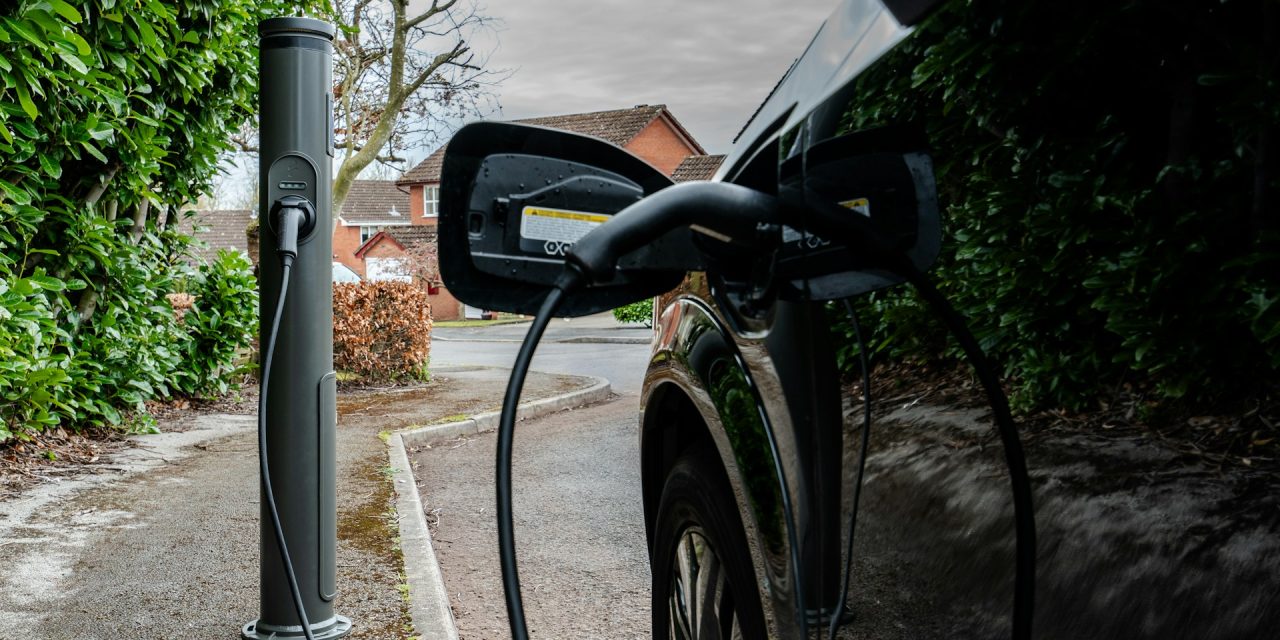
The number of public charging devices installed through completed projects supported by the government’s On-Street Residential Chargepoint Scheme (ORCS) grew by 42.6%, increasing by 5,676 devices from 13,325 on 1 July 2025 to 19,001 on 1 July 2026.
Separate analysis by specialist EV charging cable retailer EV Cable Hub found that the number of approved charging devices linked to incomplete ORCS projects has also fallen sharply over the same period.
In July 2025, 7,847 devices were linked to incomplete projects. By 1 July 2026, that figure had fallen by 77% to 1,825.
Jake Wardle, Founder at EV Cable Hub, said the figures show significant progress in improving access to public charging for drivers who do not have the option of charging at home.
He said: “The progress over the last year is really encouraging, particularly because on-street charging is so important for drivers who cannot simply plug in on their own driveway.
“For people without a driveway, having somewhere reliable to charge close to home can determine whether running an EV is genuinely practical day to day.
“Thousands more chargers have been installed through completed projects in the space of a year, while the number of devices linked to incomplete projects has fallen considerably, which is a really positive sign for the wider rollout.”
ORCS was introduced to help local authorities expand public charging infrastructure for residents without access to off-street parking.
The scheme is now closed to new applications, with newer local charging infrastructure in England being supported through the Local Electric Vehicle Infrastructure (LEVI) Fund.
Three quarters of devices linked to incomplete projects relate to schemes approved by March 2023
EV Cable Hub’s analysis found that 18 of the 30 incomplete projects were approved by the end of March 2023.
More than three quarters (76.6%) of the 1,825 approved devices are linked to projects approved by the end of the 2022/23 financial year, accounting for 1,398 devices.
- 2021/22: 333
- 2022/23: 1,065
- 2023/24: 427
The 30 projects account for approximately £12.8 million in approved project awards, around £9.7 million of which relates to projects approved in 2021/22 and 2022/23.
Government guidance set a standard completion deadline of March 2025 for ongoing ORCS projects, although extensions could be considered on a case-by-case basis where unforeseen circumstances affected delivery.
Jake added: “There are still some longer-running projects in the system, but that shouldn’t overshadow the significant amount of charging infrastructure that has already been delivered.
“For drivers who depend on public charging, maintaining that momentum will be important as the UK’s wider charging network continues to grow.”
West Sussex has the highest number of devices linked to incomplete projects
West Sussex County Council has 410 approved charging devices linked to incomplete projects, the highest total of any area in the UK.
The Cardiff Capital Region Regional Transport Authority follows with 291, while Islington and Derry City and Strabane each account for 124.
The areas with the highest totals are:
- West Sussex County Council: 410
- Cardiff Capital Region Regional Transport Authority: 291
- London Borough of Islington: 124
- Derry City and Strabane District Council: 124
- Welwyn Hatfield Borough Council: 96
- London Borough of Havering: 80
- London Borough of Bexley: 79
- Telford and Wrekin Council: 72
- Woking Borough Council: 70
- Newport City Council: 52
DfT only marks an ORCS project as complete once all charging devices have been installed and final funding payments have been claimed, meaning some devices linked to projects still awaiting formal completion may already have been installed.